

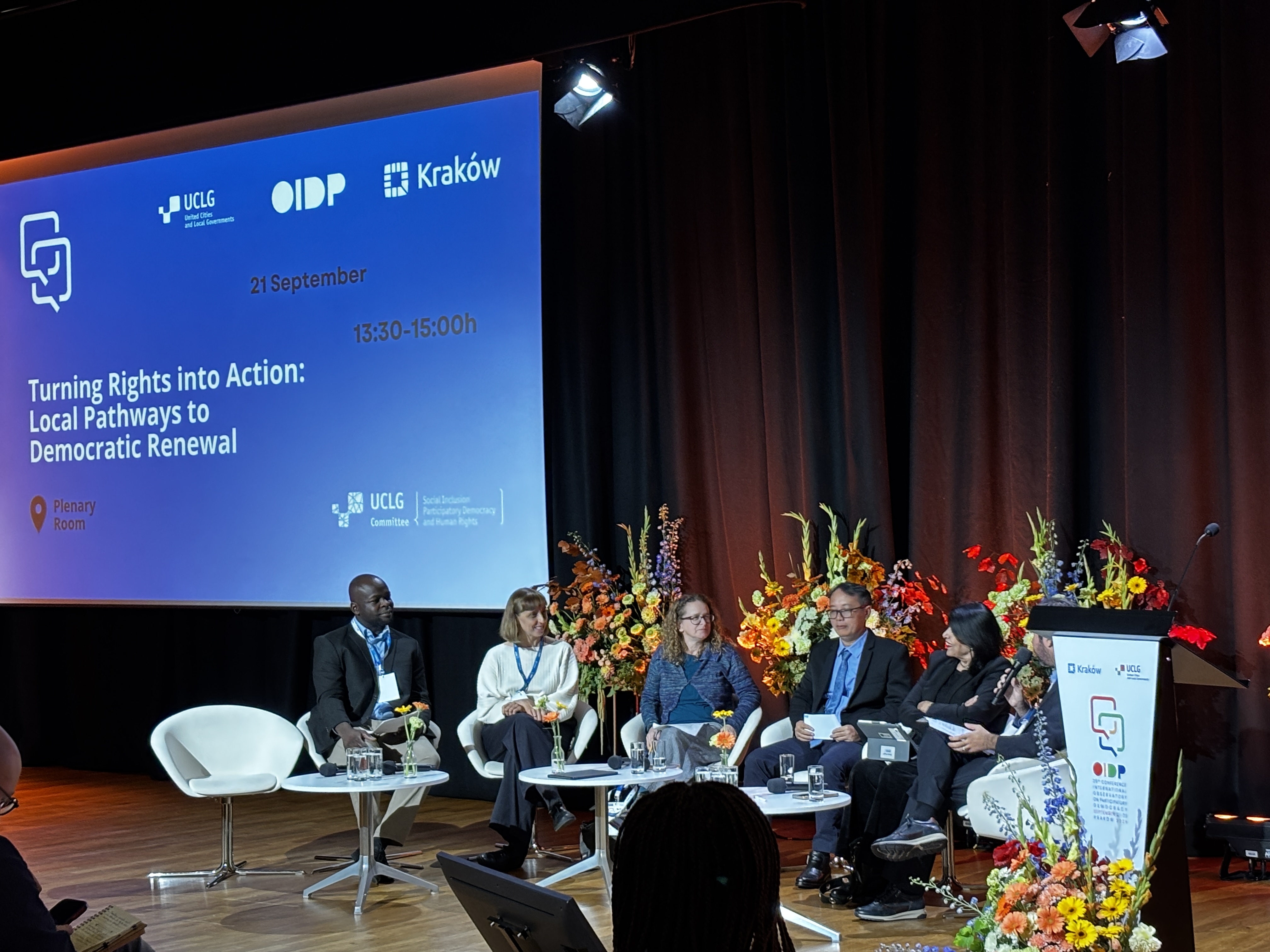
Human rights and democracy are two sides of the same coin. We cannot talk about one and ignore the other.
This was one of the key messages emerging from the panel discussion on “Turning Rights into Action: Local Pathways to Democratic Renewal,” organized by United Cities and Local Governments (UCLG) and its Committee on Social Inclusion, Participatory Democracy and Human Rights (CISDPDH), as part of the OIDP Conference in Krakow 2026.
The discussion brought together representatives from three European cities: Monika Chabior, City of Gdańsk; Shams Asadi; City of Vienna; and Dr. Tessza Udvarhelyi Józsefváros – Budapest, 8th District, to share concrete experiences of local approaches that advance participation, inclusion, and equality. In the session moderated by Adria Duarte, the experiences of these cities highlighted the fundamental role of civil society at the local level in ensuring that the voices of marginalized and underrepresented groups are reflected in policy decisions.
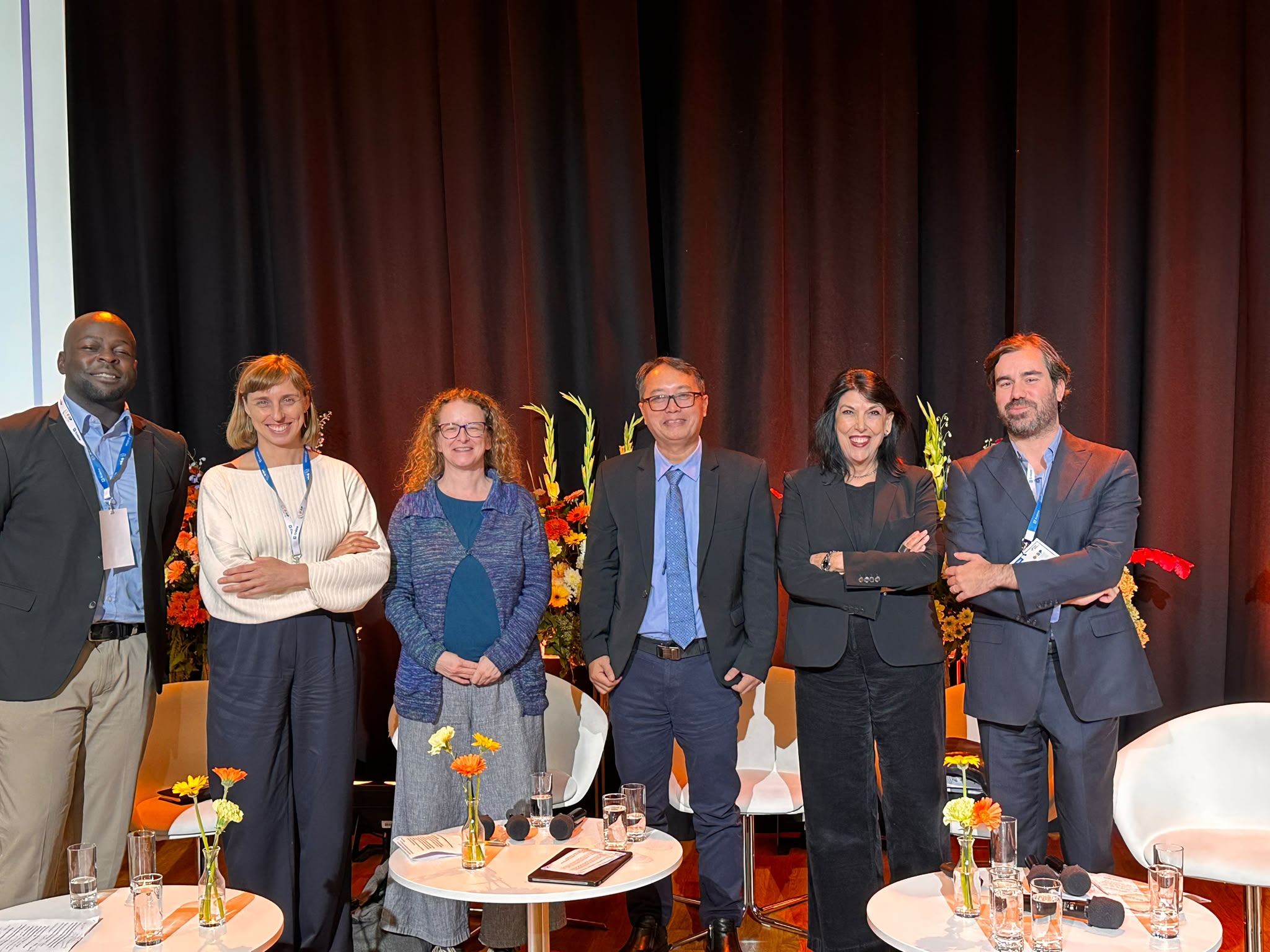

Contributing to this exchange was Fouad Jamil, a Senior Stakeholder Engagement Specialist at Kota Kita, Indonesia, whose intervention brought a civil society perspective from the local level and demonstrated how community-based action can contribute to more inclusive and participatory democratic processes.
Across the different experiences shared during the panel, three elements for strengthening democracy and human rights in cities emerged. These included, building trust, peer learning, and localization. These also form some of the core principles embedded in the Standardized Monitoring System (SMS) developed within the DeCiDE project.
In his contribution to the panel, Marshall Wanimo, DeCiDE Project Coordinator at Human Rights Cities Network, presented the DeCiDE project and the SMS as an innovative tool that enables cities to assess whether human rights are being realized at the local level.
He explained how the pilot system has been co-designed with cities and adapted to local contexts, allowing it to generate evidence-based results that reflect the realities and priorities of local communities. In his intervention, he emphasized that one of the key features of the SMS is its collaborative approach which requires Municipalities and civil society organizations to work together to implement the tool, analyze the data, and develop policy recommendations. This process not only generates evidence but also creates opportunities for knowledge exchange, peer learning, and stronger relationships between local authorities and civil society organizations.
In this sense, the SMS represents an evidence- and rights-based approach to turning rights into action. It demonstrates how monitoring can go beyond measuring progress to become a practical mechanism for strengthening participation, accountability, and democratic renewal at the local level.
The exchange also provided an opportunity to reflect on how cities can learn from one another and build the trust required to make human rights and democracy a lived reality.