

Localising the European Democracy Shield
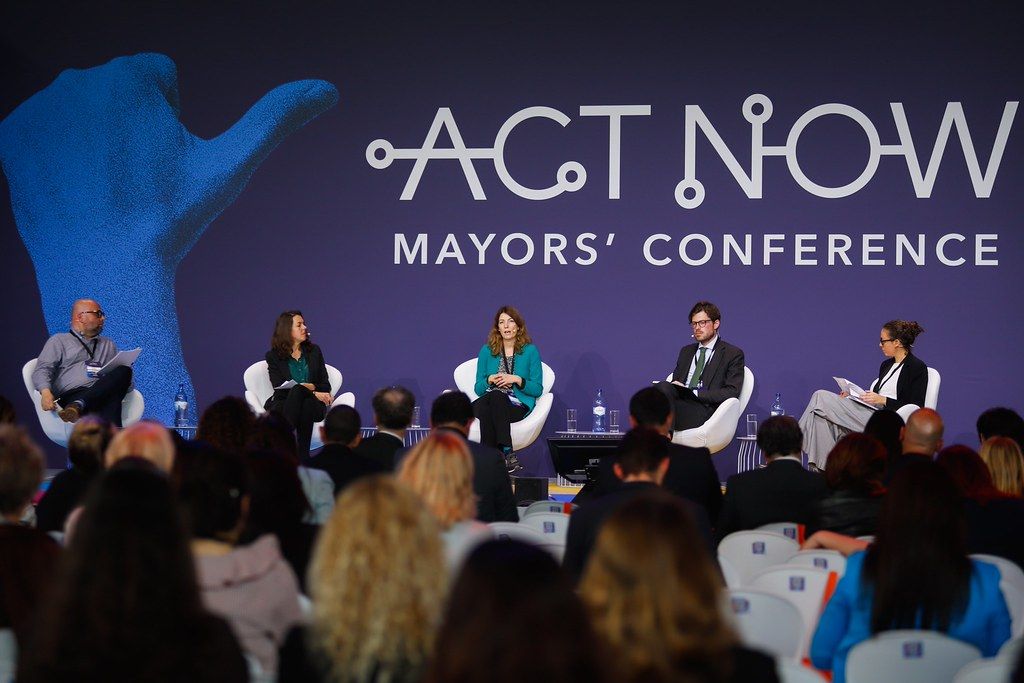
The Human Rights Cities Network (HRCN) organised a panel discussion and interactive session at the ACT NOW Mayors’ Conference 2026 in Cascais on 11 May 2026, in the context of the city becoming the 2026 European Capital of Democracy.
Our panel “Building a Local Democracy Shield: Monitoring and Participation as Safeguards for Democratic Resilience” brought together mayors, local authorities, civil society representatives, and practitioners from across Europe to explore how cities can strengthen democratic resilience through participation, transparency, digital governance, and local monitoring systems. The discussion was followed by an interactive session on localising the European Democracy Shield and what this can look like in practice in cities.
Our Panel:
- Stephen De Ron, Member of Committee of the Regions and Rapporteur of the opinion on the European Democracy Shield;
- Mateusz Płoskonka, Deputy Head of the Department of Dialogue, Consultation and Citizen Engagement Municipality of Kraków;
- Mathilde Bouyé, Senior Regional Coordinator (Europe), Open Government Partnership;
- Sophie Woodville, Digital Program Officer, Bordeaux Métropole;
- Julia Johnson (moderator), Human Rights Cities Network.
The discussion highlighted the growing importance of local governance in defending democratic principles and strengthening democratic resilience in the digital age. Speakers reflected on the role of local governments in protecting democratic values and maintaining public trust at the local level.
Particular attention was given to the role of monitoring systems as early-warning mechanisms against democratic backsliding. Mateusz Płoskonka discussed how local monitoring can help municipalities identify emerging risks related to democracy, highlighting that inclusion and transparency are essential to ensure the effectiveness of it. Our Standardised Monitoring System, developed through the “Boost Democratic Participation in Cities to Recharge Democracy in Europe” (DeCiDE) project, was presented as a practical mechanism for embedding transparency, accountability, and evidence-based governance into municipal structures.
The discussion also explored the importance of meaningful participation and the need to ensure that consultations have follow-ups, and are not used solely as box-ticking exercises. Mathilde Bouyé and Stephen de Ron reflected on how trust in public institutions can only be strengthened when participation is transparent, inclusive, and connected to concrete outcomes.
Digital governance formed another key part of the discussion. Sophie Woodville reflected on both the opportunities and risks linked to digital transformation, including the need for better education on how to use digital tools for participation and public engagement, as well as broader concerns related to accessibility, inclusion, transparency, and disinformation.
Localising the European Democratic Shield
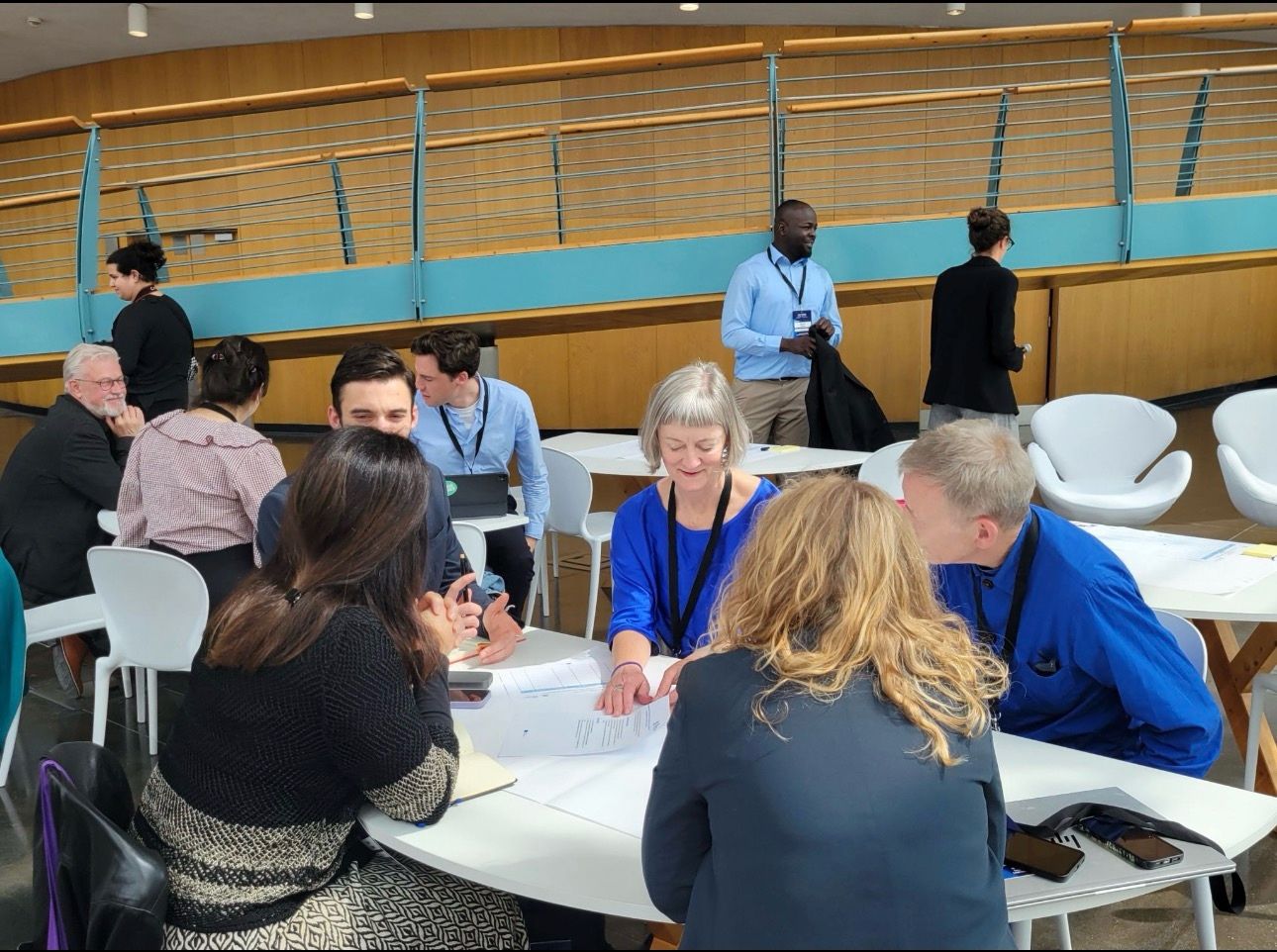 The interactive session brought together participants to discuss the three pillars of the European Democracy Shield and answering the following questions:
- What can cities do to strengthen trust, transparency, and resilience in local democratic and electoral processes?
- How can cities strengthen citizens’ ability to engage with democratic processes?
- How can cities detect, respond to, and reduce information manipulation and disinformation at local level?
The exchanges in Cascais highlighted a growing recognition that local governments are not merely implementers of democratic policies. They are active democratic actors with a critical role to play in shaping and protecting democratic resilience across Europe.
Through the questions, participants identified several priorities for strengthening democracy at the local level:
- Establish and expand citizens’ assemblies to facilitate deliberative participation;
- Increase the use of participatory budgeting to give residents a direct role in allocating public resources;
- Involve citizens in monitoring and implementation processes to strengthen accountability and ownership;
- Invest in civic education to build democratic literacy, critical thinking, and long-term engagement.
As discussions on the European Democracy Shield continue to evolve, the conversations in Cascais demonstrated that democratic resilience is built from the ground up. Cities are uniquely positioned to strengthen trust, create meaningful opportunities for participation, and develop innovative approaches to safeguarding democratic values in an increasingly complex environment.
Throughout both the panel and interactive discussions, three themes consistently emerged as essential foundations of democratic resilience: trust, participation, and meaningful follow-up. Participants agreed that without these elements, efforts to strengthen democracy at the local level cannot succeed. Building resilient democracies therefore requires not only robust institutions, but also inclusive processes that enable citizens to actively shape, monitor, and contribute to democratic life.